
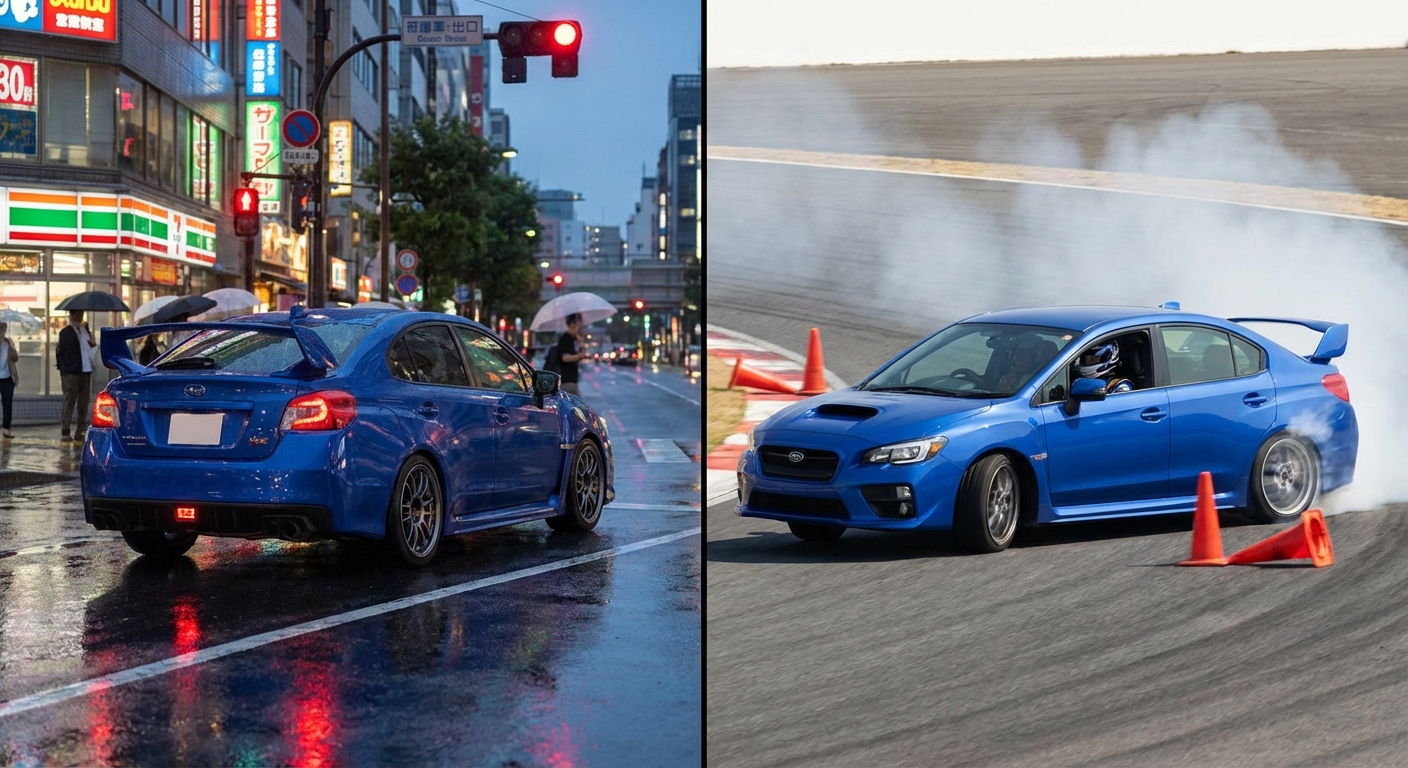
Take one car, two environments—the street and the circuit—and you’ll discover that performance means different things in each.
Same Car, Different Worlds: Street vs. Track Performance
On the street, performance is about responsiveness, confidence, and safety in unpredictable conditions. On track, it’s about consistency, heat management, and behavior at the limit.
Understanding these differences helps you set priorities for modifications and maintenance, so your car performs where you actually drive it.
1. Engine & Cooling: Bursts vs. Sustained Abuse
Street Performance Priorities
On the road, the engine rarely spends long at redline. Performance is about:
- Strong mid-range torque for overtakes.
- Smooth throttle response for precise control.
- Reliable operation in varied conditions—stop-and-go, traffic, short trips.
Street-focused maintenance:
- Frequent oil changes if you do lots of short journeys (condensation and fuel dilution are common).
- Ensure the PCV system is healthy; excessive oil vapor fouls intakes and sensors.
- Keep the cooling system clean and leak-free; fan operation is critical in traffic.
- Use quality fuel and keep injectors clean to prevent hesitation under quick throttle.
Track Performance Priorities
On track, the engine lives at high rpm and high load.
Key needs:
- Heat management above all.
- Predictable power delivery in long pulls.
- Fuel and lubrication systems that don’t starve under G-loads.
Track-focused maintenance and upgrades:
- High-quality synthetic oil with robust high-temp performance; consider shorter change intervals.
- Upgraded radiators and possibly oil coolers for turbo or high-output engines.
- Regular inspection of hoses, clamps, and belts—thermal cycling is severe.
- If cornering forces are high, consider baffled oil pans or accusumps.
On the street, overheating is an inconvenience. On track, it’s a fast track to engine damage.
2. Suspension & Ride: Compliance vs. Precision
Street Performance Priorities
Roads are imperfect: potholes, expansion joints, unexpected debris. You need a suspension that:
- Soaks up bumps without losing composure.
- Offers good straight-line stability at highway speeds.
- Delivers clear, predictable feedback without punishing you.
Street-focused suspension maintenance:
- Replace worn shocks/struts; they’re crucial for stability under braking and cornering.
- Inspect bushings for age-related cracks—noise and vagueness often start here.
- Aim for a mild performance alignment that won’t destroy tires on commutes.
- Avoid overly stiff spring rates and ultra-low ride heights that cause constant bottoming out.
Track Performance Priorities
On circuit, the surface is smoother, but loads are higher and more sustained.
You want:
- Reduced body roll and pitch.
- Precise control over weight transfer.
- Geometry that maintains optimal contact patches under high Gs.
Track-focused suspension setup:
- Stiffer springs and dampers matched to the car’s weight and grip level.
- Additional negative camber to protect the outside shoulders of the tires.
- Fine-tuned toe settings for sharper turn-in, accepting some nervousness on-center.
- Regular torque checks of suspension bolts—high loads can loosen hardware.
The ideal street setup makes bad roads tolerable. The ideal track setup makes lap after lap feel repeatable and composed.
3. Brakes: One Panic Stop vs. Lap After Lap
Street Performance Priorities
On the street, even spirited driving involves short braking events with plenty of cool-down.
What matters most:
- Strong initial bite when you need to stop now.
- Short stopping distances on cold brakes.
- Quiet, low-dust operation for everyday use.
Street brake maintenance tips:
- Use quality street pads designed for low-temperature performance.
- Flush brake fluid at least every 1–2 years to maintain a firm pedal.
- Inspect pads and rotors at each tire rotation.
- Ensure the parking brake functions properly—it’s part of overall brake system health.
Track Performance Priorities
Track braking is brutal: repeated high-speed stops, very little cooling time.
You need:
- High-temperature pad compounds.
- Fluid that won’t boil under hard use.
- Calipers and hardware that resist flexing under extreme pressure.
Track brake maintenance & upgrades:
- Dedicated track pads with the right operating temp range.
- High-boiling-point performance brake fluid (and frequent flushes).
- Check for pad taper, rotor cracking, and heat checking after events.
- Consider brake ducting to feed cool air to the rotors.
Street pads on track can fade to the floor. Track pads on the street can be noisy, dusty, and weak when cold. Choose based on where you actually brake hardest.
4. Tires: All-Weather Versatility vs. Peak Grip
Street Performance Priorities
Daily driving means:
- Wet, dry, and sometimes cold conditions.
- Road imperfections, debris, and mixed surfaces.
You want tires that:
- Offer dependable wet grip and good hydroplaning resistance.
- Warm up quickly and behave predictably at normal speeds.
- Last long enough to be practical.
Street tire maintenance:
- Keep pressures at recommended levels and adjust for load.
- Rotate regularly to maintain even wear and stable handling.
- Replace tires not just on tread depth but age and cracking.
Track Performance Priorities
On circuit, you chase absolute grip and consistency.
You look for:
- High-temp compounds that don’t fall apart after a few hot laps.
- Stiff sidewalls for sharp turn-in.
- Wider footprints (within reason) to maximize contact patch.
Track tire care:
- Manage pressures hot, not just cold—measure after sessions.
- Monitor heat cycles; performance often degrades before tread disappears.
- Use appropriate camber settings to avoid cooking the outer shoulders.
Street performance is about safety and confidence in all conditions. Track performance is about absolute grip in a narrow, high-temperature operating window.
5. Reliability & Inspection: Daily Dependability vs. Event Readiness
Street Reliability Priorities
Your car needs to start every morning and handle surprise situations.
Key focus areas:
- Regular oil, filter, and fluid changes on schedule.
- Paying attention to new noises, vibrations, or warning lights.
- Maintaining wipers, lights, and HVAC—comfort aids awareness and reduces fatigue.
- Keeping alignment sensible to avoid rapid tire wear.
Track Reliability Priorities
On track, small oversights become big problems quickly.
Adopt a pre- and post-event checklist:
- Check fluid levels and look for leaks.
- Torque wheels and critical suspension/brake hardware.
- Inspect tires for cuts, cords, and uneven wear.
- Verify brake pad thickness and rotor condition.
- After each event, recheck everything—heat and load reveal weak points.
Track work is controlled but extreme. Reliability comes from aggressive, proactive maintenance.
The Takeaway: Tune Your Car for Where It Lives Most
You don’t need a full race setup for commuting, and a soft, all-season street tune will wilt under track abuse. The sweet spot is being honest about how you drive.
To get the best performance:
- Choose components and maintenance intervals based on street vs. track balance.
- For dual-use cars, accept some compromise: dedicated pads and wheels for track days, street-friendly setups the rest of the time.
- Remember the five pillars of performance and maintenance that apply everywhere:
- Healthy, appropriately serviced engine and cooling.
- Suspension that matches the roads (or track) you use.
- Brakes maintained for the temperatures they see.
- Tires chosen and cared for based on conditions.
- Consistent reliability through disciplined inspection.
Dial these in thoughtfully, and your car will feel at home whether it’s carving your favorite on-ramp or clipping apexes on a Saturday.