
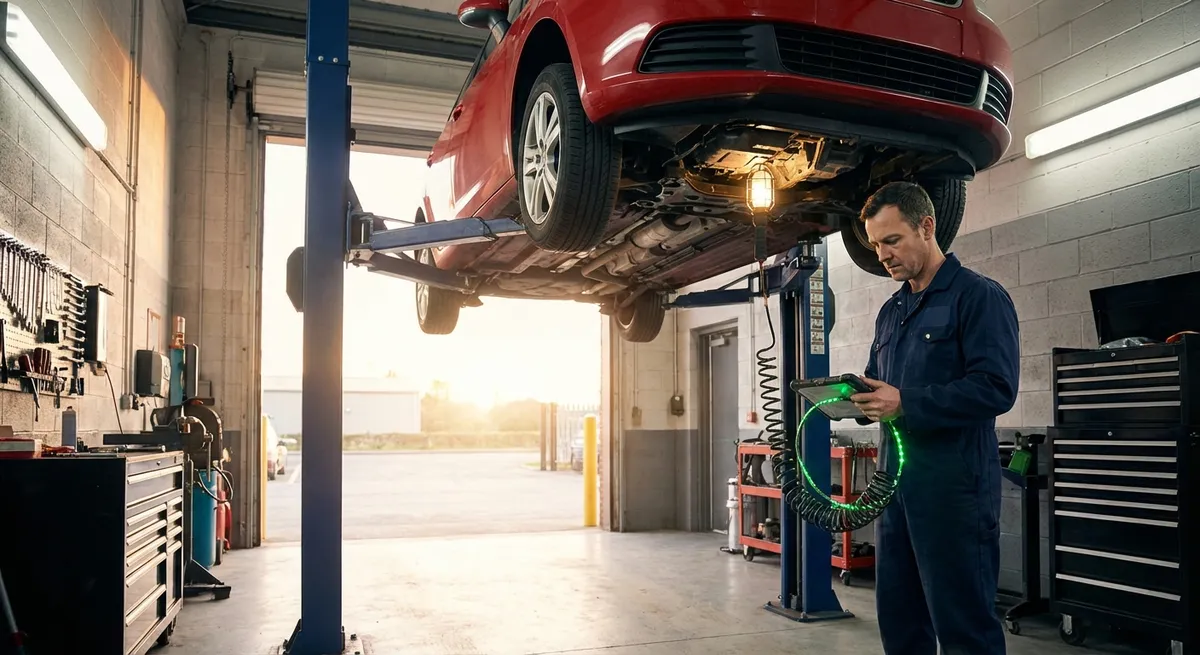
If you love driving, maintenance isn’t a chore—it’s your cheat code for sharper response, stronger pulls, and a car that feels “right” every time you turn the key. At Drive Kick 13, we don’t think of maintenance as just preventing breakdowns. We treat it as performance preservation. Let’s break down how a smart, enthusiast-minded approach to upkeep keeps your car feeling dialed-in long after the odometer says it shouldn’t.
Below are five key performance-focused maintenance angles every serious driver should understand—and actually use.
1. Engine Health Is Throttle Response, Not Just Longevity
Most drivers think oil changes are about avoiding catastrophic engine failure. For enthusiasts, they’re also about keeping throttle response crisp and power delivery consistent.
Fresh, high-quality oil reduces internal friction, helps maintain proper lubrication film at high RPM, and keeps variable valve timing systems from gumming up. Overstretched oil intervals lead to varnish and sludge that can slow cam phasers, affect timing accuracy, and mute the engine’s eagerness to rev. The result? The car technically “runs,” but it feels lazy and grainy instead of smooth and eager.
Pair the right viscosity (per the manufacturer) with a reputable synthetic, and stick to intervals that reflect how you actually drive—frequent short trips, hot climates, or hard driving all justify shorter intervals. Add in timely replacement of engine air filters and, for turbo cars, obsess over warm-up and cool-down habits. Letting oil temperature come up before hammering it, and easing off for a minute before shutdown, keeps turbos spooling willingly instead of wearing prematurely.
Engine maintenance isn’t just survival; it’s how you protect that “pulls hard all the way to redline” feeling.
2. Tires and Alignment: Where Grip, Feedback, and Efficiency Collide
If there’s one maintenance area that transforms performance more than almost any other, it’s tires—followed closely by alignment. You can bolt on all the power parts you want, but if your contact patches are tired, old, or unevenly worn, you’ve crippled the car at step one.
Rubber hardens with age, even if the tread looks “fine.” That means longer braking distances, less predictable breakaway, and dulled steering feel. Enthusiast drivers should be checking:
- Tread depth across the width, not just one spot
- Age of the tire (via DOT date code)
- Signs of cupping, feathering, or shoulder wear that scream “alignment issue”
Alignment isn’t just about not pulling to one side. Camber, caster, and toe all shape how the car turns in, tracks at speed, and feels mid-corner. A car that “wanders” or feels nervous on the highway often just needs a proper alignment. If you’ve upgraded wheels, suspension, or ride height, treating alignment as a one-and-done factory spec is leaving performance on the table.
Think of it as tuning the car’s personality: a precise alignment keeps your steering feel razor sharp, your stability locked down, and your tires wearing evenly so you actually get full value—and full performance—out of them.
3. Brakes: The Most Overlooked Performance System
Most people only think about brakes when something squeals or the pedal goes soft. Enthusiasts should think about brakes the way they think about power: consistent, repeatable, confidence-inspiring.
Brake performance is more than just pad material. Proper maintenance touches:
- Brake fluid condition (and boiling point)
- Rotor thickness and surface condition
- Pad wear pattern and material choice
- Caliper slide pin lubrication and freedom of movement
Brake fluid is hygroscopic—it absorbs moisture over time. That moisture lowers the boiling point of the fluid, which means under repeated hard stops or spirited driving, you can experience fade or a long, spongy pedal. Regularly flushing with a quality fluid—especially if you drive hard or live in humid areas—keeps the pedal firm and predictable.
Rotors with deep grooves or significant lips on the outer edge aren’t just “cosmetic.” They impact pad contact, heat distribution, and noise. Combine fresh fluid, healthy rotors, and pads chosen for your style of driving, and suddenly your car feels like it lost 500 pounds every time you go for the middle pedal. Strong, consistent brakes don’t just make you safer; they unlock confidence that lets you actually use the performance you already have.
4. Suspension and Bushings: The Hidden Architecture of Handling
When a car starts to feel “loose,” most owners blame the shocks or the steering rack. Often, the real villains are worn bushings and tired dampers that have slowly faded over years of use.
Your suspension isn’t just springs and struts. It’s an entire ecosystem of components—control arms, sway bars, links, mounts, and rubber or polyurethane bushings—working together to keep geometry stable. As bushings age, they crack, deform, and allow more unwanted movement. The symptoms show up as:
- Sloppy or delayed steering response
- Extra body roll or “float” over bumps
- Inconsistent alignment under load (the car feels different mid-corner than it does in a straight line)
Fresh dampers (shocks/struts) restore control over body motions: how quickly the car takes a set into a corner, how it recovers from a bump, and whether it feels buttoned-down at speed or boaty and vague. Even if your car isn’t bouncing like a lowrider, a set of worn dampers can be quietly stealing precision and control.
The enthusiast mindset: inspect suspension components regularly, don’t ignore clunks or knocks, and treat high-mileage bushings and dampers as performance parts, not just “repairs.” When this system is right, the car feels unified—steering, chassis, and tires all talking to you in the same language.
5. Electronics, Sensors, and Software: The New Frontier of “Invisible” Maintenance
Modern performance lives and dies by sensor accuracy and software logic. Even if your car isn’t throwing a check engine light, marginal sensors and outdated software can take a real bite out of drivability and performance.
Mass airflow sensors, oxygen sensors, knock sensors, and even simple temperature sensors all feed data into the ECU. When they drift out of spec—without failing completely—the computer’s fuel, timing, and boost strategies become less precise. You get rougher idle, weaker midrange, and inconsistent power, but no obvious smoking gun.
On top of that, many manufacturers release updated ECU and transmission software over the life of a vehicle. These updates can refine shift mapping, improve throttle calibration, and fix drivability quirks that owners simply assume are “just how the car is.”
Enthusiast maintenance in the modern era means:
- Keeping connectors clean and protected from corrosion
- Replacing critical sensors at reasonable intervals, not only when they die
- Checking for manufacturer service campaigns and software updates
- Using proper diagnostic scans, not just cheap code readers, when something feels off
This is the invisible layer of performance: everything feels smoother, sharper, and more linear when the car’s brain is getting clean, accurate data and running the latest logic.
Conclusion
Performance isn’t only built in a tuning shop or on a dyno; it’s preserved, refined, and unlocked in your driveway with smart, proactive maintenance. When you treat oil, tires, brakes, suspension, and electronics as a performance package—not random line items—you end up with a car that feels alive long after the spec sheet says it shouldn’t.
For a driver who cares, maintenance is not about avoiding the tow truck. It’s about protecting the way your car accelerates, turns, and stops—the very reasons you fell in love with driving in the first place. Keep your maintenance sharp, and your car will pay you back every single mile with the one thing that really matters: a drive that still makes you want to take the long way home.
Sources
- [U.S. Department of Energy – Fuel Economy & Maintenance](https://www.fueleconomy.gov/feg/maintain.jsp) - Explains how proper maintenance (oil, tires, engine tuning) affects efficiency and performance
- [National Highway Traffic Safety Administration – Tire Safety](https://www.nhtsa.gov/equipment/tires) - Authoritative guidance on tire wear, aging, and maintenance for safety and grip
- [Car and Driver – How to Maintain and Inspect Your Brakes](https://www.caranddriver.com/features/a31853983/how-to-inspect-brakes/) - Practical breakdown of brake system care and inspection techniques
- [Society of Automotive Engineers (SAE) – Brake Fluid Hygroscopicity Study](https://www.sae.org/publications/technical-papers/content/2002-01-2586/) - Technical insight into how moisture affects brake fluid performance
- [AAA – Vehicle Maintenance and Modern Technology](https://newsroom.aaa.com/auto/repair-and-maintenance/) - Overview of how modern systems and electronics influence maintenance needs and vehicle performance